Common Bite Problems Salem, OR
A properly aligned bite does more than create an attractive smile. It affects how you chew, speak, and even breathe. When the upper and lower teeth don’t come together correctly, it can place uneven stress on the jaw, wear down tooth enamel, and lead to discomfort that grows worse over time. Fortunately, orthodontic treatment at Christensen Orthodontics can address these issues effectively, restoring both function and appearance.
Most Common Bite Problems
There are several types of bite problems we can treat for our patients here at Christensen Orthodontics.
Overbite
An overbite occurs when the upper front teeth overlap the lower front teeth too far vertically. A mild overbite is normal, but a deep overbite can cause the lower teeth to bite into the roof of the mouth, leading to gum irritation, enamel wear, and jaw discomfort.
Underbite
An underbite is the opposite, where the lower teeth sit in front of the upper teeth when the mouth is closed. This misalignment can make chewing difficult, strain the jaw joints, and affect speech clarity. Underbites often become more pronounced with age if left untreated.
Crossbite
A crossbite occurs when some upper teeth sit inside the lower teeth rather than outside them. It can affect the front teeth, the back teeth, or both. Over time, a crossbite can cause uneven jaw growth, tooth wear, and asymmetry in the face and jaw.
Open Bite
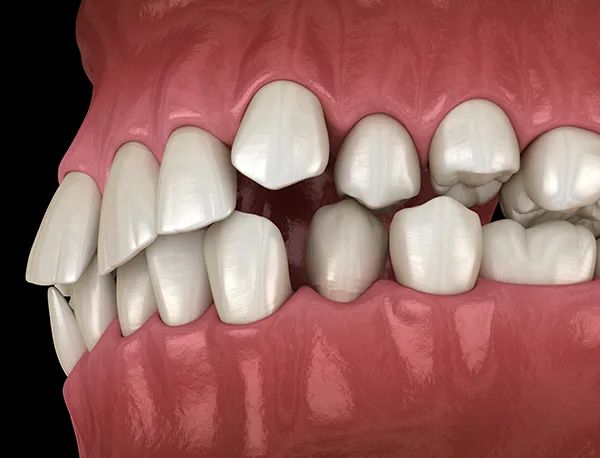
With an open bite, the upper and lower front teeth don’t make contact when the mouth is closed, leaving a visible gap. This makes it difficult to bite into food properly and can also affect how certain sounds are formed when speaking.
Crowding
Crowding happens when there isn’t enough space in the jaw for teeth to align correctly. Teeth may twist, overlap, or shift out of position. Beyond cosmetic concerns, crowded teeth are harder to clean, which raises the risk of decay and gum disease.
Spacing Issues
Gaps between teeth can result from missing teeth, teeth that are smaller than average, or jaw size discrepancies. Spacing problems can allow teeth to drift over time and may affect bite stability if not addressed.
How Orthodontics Treats Bite Problems
Braces, clear aligners, and other orthodontic restorations can help treat these bite problems, improving the alignment of your teeth, how you chew, and how you feel overall about your smile.
Braces
Traditional braces use brackets bonded to the teeth and connected by archwires to apply controlled pressure over time. This gradually moves teeth into proper alignment and corrects the position of the jaw. Braces are particularly effective for complex bite issues such as severe underbites, crossbites, and significant crowding.
Clear Aligners
Clear aligners are a series of removable, transparent trays custom-made to shift teeth incrementally. They work well for correcting mild to moderate overbites, open bites, crowding, and spacing problems. Because they are removable, they offer flexibility in daily life while still providing consistent, measurable progress.
Palatal Expanders
A palatal expander widens the upper jaw to create more room for teeth and improve crossbite alignment. They are most effective in younger patients whose jaw is still developing, but can also be used in adults in some cases.
Retainers and Finishing Appliances
After active treatment, retainers hold teeth in their corrected positions and prevent relapse. In some cases, additional appliances may be used to fine-tune the bite and ensure long-term stability.
Find Out If Orthodontic Treatment Is Right for You
If you’ve noticed any of these bite problems, or if a general dentist has mentioned that your bite may need attention, Christensen Orthodontics in Salem is here to help. Our team can evaluate your bite, explain your orthodontic treatment options, and create a treatment plan designed around your specific needs. Contact our office at 503-967-9887 to schedule your consultation.